

Understanding and Supporting Children through Challenging Behaviours
One of the greatest pieces of advice I ever received was: “When a child flips their lid (has a tantrum), they lose all control. It's like being
caught in a rip at the beach. It's our job to hold the calm, and provide them with that life raft to bring them back to a point of rational
thinking".
Challenging behaviours in children, such as tantrums, defiance, or aggression, can leave parents and educators feeling overwhelmed and
unsure of how to respond. However, understanding the underlying reasons for these behaviours and adopting supportive strategies can
turn these moments into opportunities for growth and connection. Together, we will explore the science behind challenging behaviours
and I'll provide you with some practical tips for addressing them with compassion and effectiveness.
-
Challenging behaviours are often a child’s way of communicating unmet needs or feelings they cannot yet express verbally. Common triggers include:
Developmental Factors: Young children are still learning to regulate
their emotions and behaviours. Their brains are in the process of
developing skills such as impulse control, emotional regulation, and
problem-solving.Unmet Needs: Hunger, tiredness, overstimulation, or lack of
connection can lead to challenging behaviours. These physical and
emotional needs are critical for a child’s well-being.Stress or Anxiety: Changes in routine, conflicts at home, or unfamiliar
environments can trigger stress that manifests as disruptive
behaviours.Lack of Skills: A child may not yet have the language, social, or
problem-solving skills to handle a situation appropriately.Seeking Connection: Sometimes, challenging behaviours are a way
for children to seek connection or reassurance from adults.
-
The brain plays a significant role in how children react to stress or frustration. The part of the brain responsible for reasoning and self-control (the prefrontal cortex) is not fully developed in young children. Instead, they rely on the more reactive limbic system, which controls emotions. This means that in moments of heightened emotion, children often "act out" because they cannot yet manage their feelings in a calm or logical way.
-
Stay Calm and Regulate Yourself: Children often mirror the
emotions of adults around them. By staying calm, you model
emotional regulation and provide a sense of safety.Identify the Root Cause: Instead of focusing solely on the
behaviour, ask yourself: What might this child be trying to
communicate? Are they hungry, tired, or feeling overwhelmed?Validate Their Feelings: Use empathetic language to
acknowledge the child’s emotions. For example: “I see you’re
upset because your block tower fell. That can be really
frustrating.”Set Clear and Consistent Boundaries: Children feel secure when
they know what to expect. Communicate clear expectations
and follow through consistently, using a calm and firm tone.Teach Emotional Regulation Skills: Help children name their
emotions and offer tools to manage them. For instance, deep
breathing, sensory activities, or quiet corners can help them
calm down.Provide Choices: Offering simple choices, such as “Would you
like to put your toys away first or your books?”, gives children
a sense of control and reduces power struggles.Reinforce Positive Behaviours: Catch children being good and
praise their efforts. Specific feedback, such as “I love how you
used your words to ask for help,” reinforces desired
behaviours.Collaborate with the Child: For older children, involve them in
problem-solving. Ask, “What can we do next time you feel
angry?” to empower them to develop self-regulation
strategies.
-
While most challenging behaviours are part of typical development, some may require additional attention. Consider seeking support if:
The behaviour is frequent and intense, interfering with the child’s ability to function at home, school, or with peers.
The child seems overly withdrawn, anxious, or aggressive for an extended period.
You’re feeling overwhelmed and unsure of how to proceed.
Educators, paediatricians, or child psychologists can provide guidance and tools to address more persistent challenges.
-
The foundation of addressing challenging behaviours lies in building strong, trusting relationships with children. When children feel safe, valued, and understood, they are better equipped to manage their emotions and behaviours. Whether you’re a parent or an educator, remember that your calm presence and consistent support are powerful tools in helping children navigate their emotions and grow into resilient, emotionally intelligent individuals
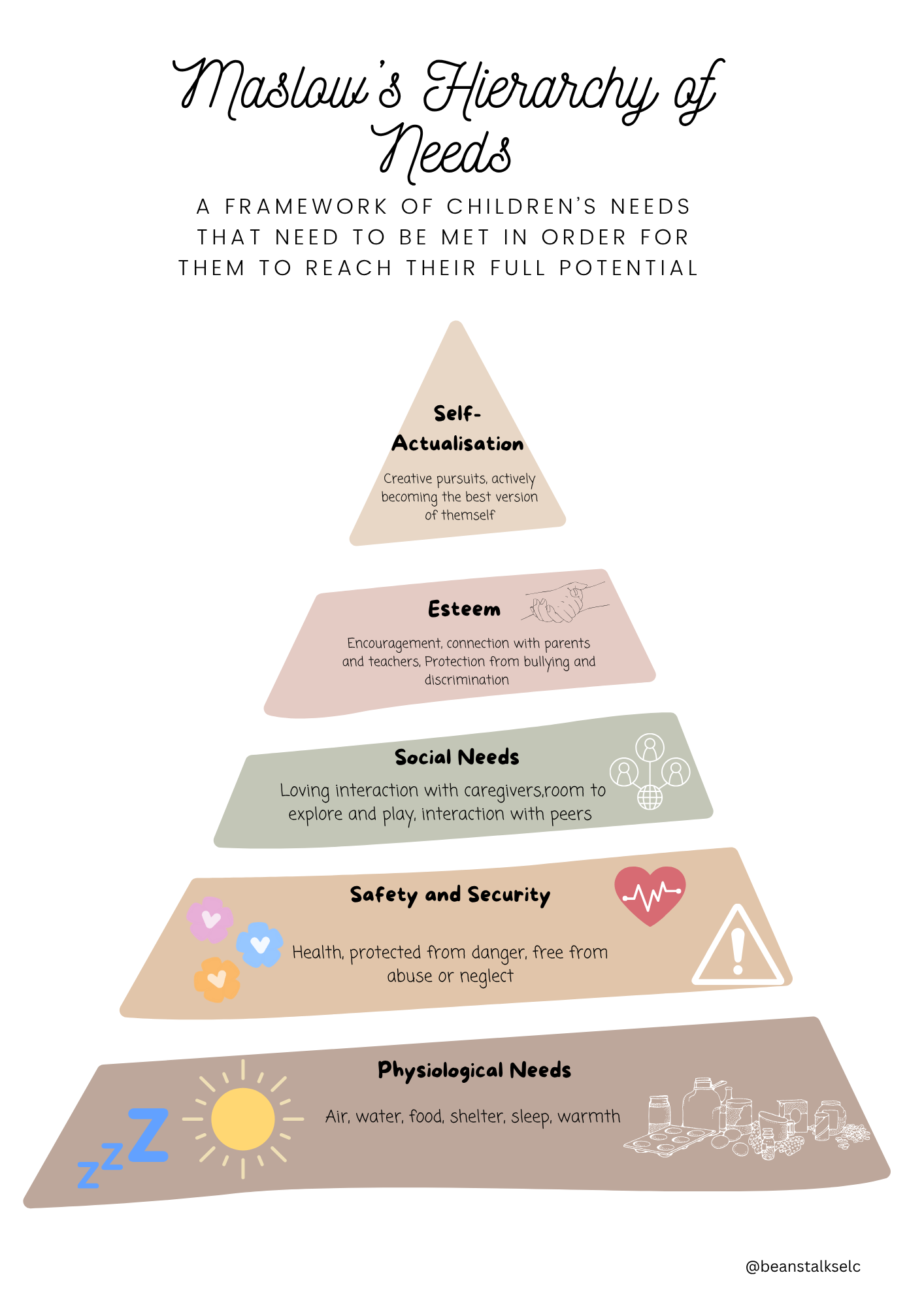
I love to use Maslow’s Hierarchy as a checklist to find the source of why a child my exhibit a tricky behaviour. Children’s behaviours will point to an unmet need.
My Favourite Resources to Support Children's Behaviour
Having a toolbox of resources is a life-saver when it comes to connecting and redirecting children. These are a few of my
favourite resources that I believe every family and classroom should have. Click on the links below for more details